Last updated:
Micro-investing can be a way to start investing with small amounts of money. Here’s what first-time investors need to know.
What is micro-investing?
Micro-investing is investing small amounts of money regularly through an app or online platform. It can be a way to start investing when you don’t have much money to commit.
Many micro-investing apps let you invest as little as a few dollars at a time. Some allow you to invest spare change by rounding up everyday purchases and investing the difference.
While micro-investing can help you get started and develop a savings habit, it's important to understand how these products work, what they cost, and the risks involved.
Micro-investing can:
- help you start investing with a small amount of money
- make expensive investments more accessible
- help you build a regular savings and investing habit
- allow you to spread small amounts across multiple investments (diversification).
Micro-investing limitations:
- because investment amounts are small, returns may build more slowly
- fees can also have a larger impact on performance when amounts are small
- sometimes complex ownership arrangements
- possible restrictions when moving investments to another provider
How micro-investing apps work
Most micro-investing apps follow a similar process:
chevron_right You open an account
chevron_right You add money manually or automatically
chevron_right You choose an investment option/s
chevron_right The provider invests your money according to your chosen option/s
Some platforms invest directly in shares or ETFs. Others invest through managed funds or model portfolios.
Depending on the micro-investing provider you choose, you may be able to:
- invest a small amount ad hoc
- set up regular automatic investments
- round up everyday purchases and invest the spare change
- invest in shares, exchange traded funds (ETFs) or other investments
Different micro-investing products have different features, investment options and ownership arrangements. Before investing, check how the product works and how your investments are held.
Note: you may not own the investments directly
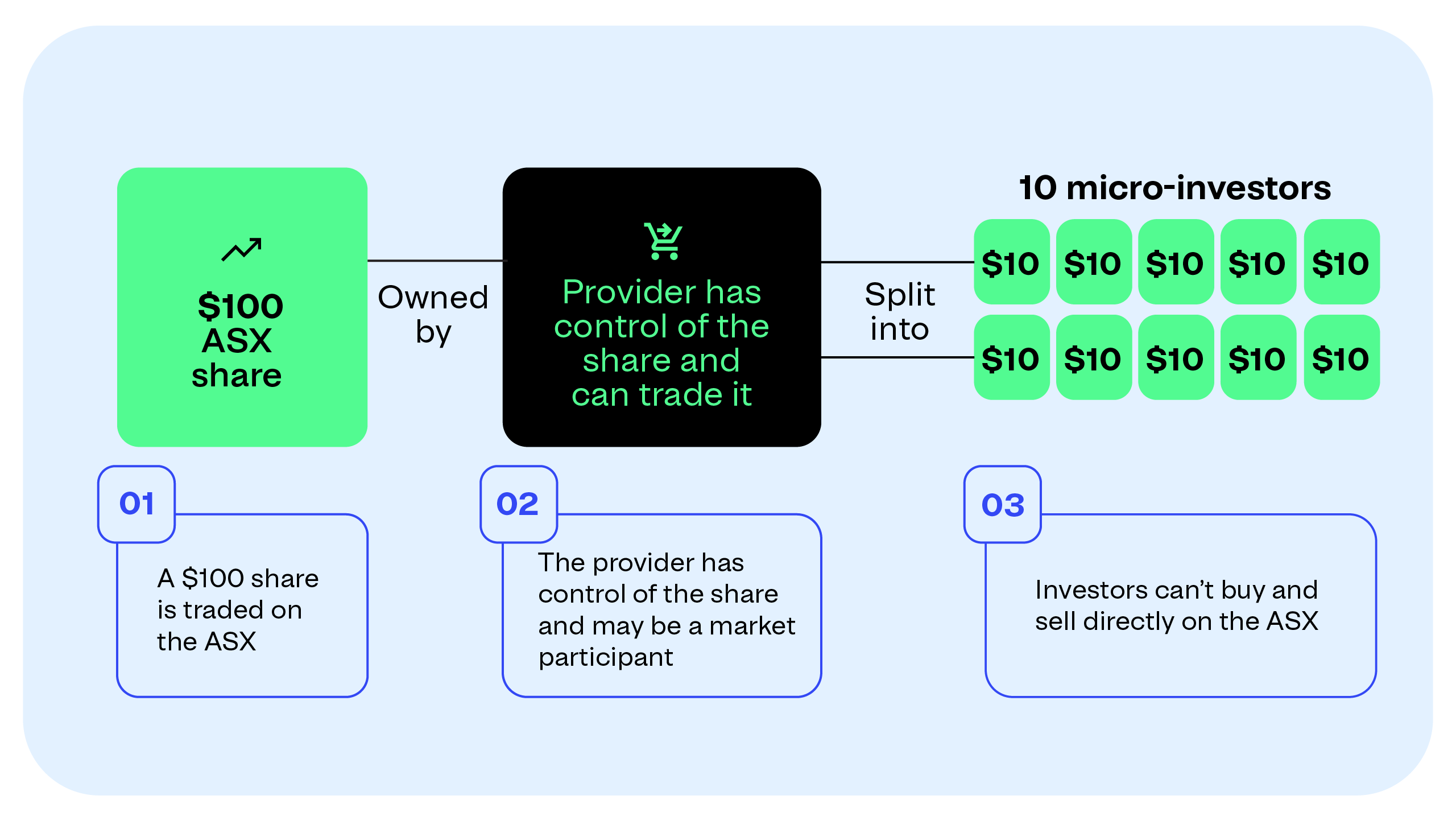
With micro-investing, the amount of money you put in each time is often small. So, some micro-investing providers use fractional investing.
Fractional investing (or fractional trading) allows investors to purchase part of a share or other asset, by splitting the ownership or value of an asset among multiple investors or between an investor and a provider.
What does that mean for you?
Where the micro-investing provider is the direct owner of the investment, it means that you can buy and sell through that platform. You can’t buy and sell your investments directly on the market.
Gina held a trading account with a micro-investing provider for five years and, by adding small amounts of money frequently, built a sizeable investment. Over time the ongoing fees charged by the micro-investing provider had increased, and Gina wanted to start using a different online broker.
Because the micro-investing provider directly owned the shares Gina had purchased and didn’t offer a transfer option, the only way Gina could switch brokers was to pay a fee to sell her investments, plus pay capital gains tax on the profit she had made, and then reinvest her money through the new broker.
Micro-investing fees and costs
As with all investing, there are fees and costs associated with micro-investing. While all providers may have a slightly different fee structure, fees and costs to check before you invest include:
| Fee | What is it |
| Transaction or brokerage fees | A fee charged when you buy or sell investments. This could be a dollar value or a percentage of the order value. |
| Subscription fees | Some providers may charge a monthly or annual platform subscription fee. |
| Currency exchange fee | A fee that may apply when converting money between currencies for overseas investments. |
| Transfer fees | There may be transfer fees associated with linked bank top-ups and round-up functionality. |
| Card top-up fees | This may include wallet top-ups, including PayID functionality. |
| Withdrawal fee | There may be a withdrawal fee to take money out of your trading account. |
Risks of micro-investing
Micro-investing has many of the same risks as other forms of investing, including market risk, sector risk, liquidity and credit risks, inflation and timing risks.
If the micro-investment platform retains direct ownership of the investments, that adds additional risk – if the provider goes bust, it may be a long and complex process to get your money back, and in some instances, you may not get it all back.
5 key questions to ask before you choose micro-investing
Before you open a micro-investing account, ask yourself these 5 key questions:
1. Do I understand what my money will be invested in?
- will I be investing in shares or ETFs or managed funds?
- or will I be investing in something else?
- am I comfortable with the amount of investment risk I’m taking?
2. How does the micro-investing app work?
- can I choose my own investments?
- does the provider choose investments for me?
- is investing automatic?
- can I stop or change my investments at any time?
3. Do I understand who will own the investments?
- will I own the investments I buy, or will the micro-investing provider own them?
- and what does that mean if I want to sell them?
4. Do I know what fees I’ll be paying?
- are those fees reasonable, considering how much I’ll be investing?
- how do the fees compare to those of other providers or brokers?
5. Am I sure this is the right way to invest to achieve my goals?
- does it match my long-term investment plan?
- have I compared what other investment opportunities and products are available?
Join thousands of Australians and get tools, tips and calculators to help with your money - straight to your inbox each month.
Sign up