Last updated:
Fractional trading lets you buy part of a share instead of the whole thing. It can make investing more affordable, but it can also affect your rights as an investor.
How fractional share trading works
Fractional investing (or fractional trading) allows investors to purchase part of a share or other asset, by splitting the ownership or value of an asset among multiple investors or between an investor and a provider.
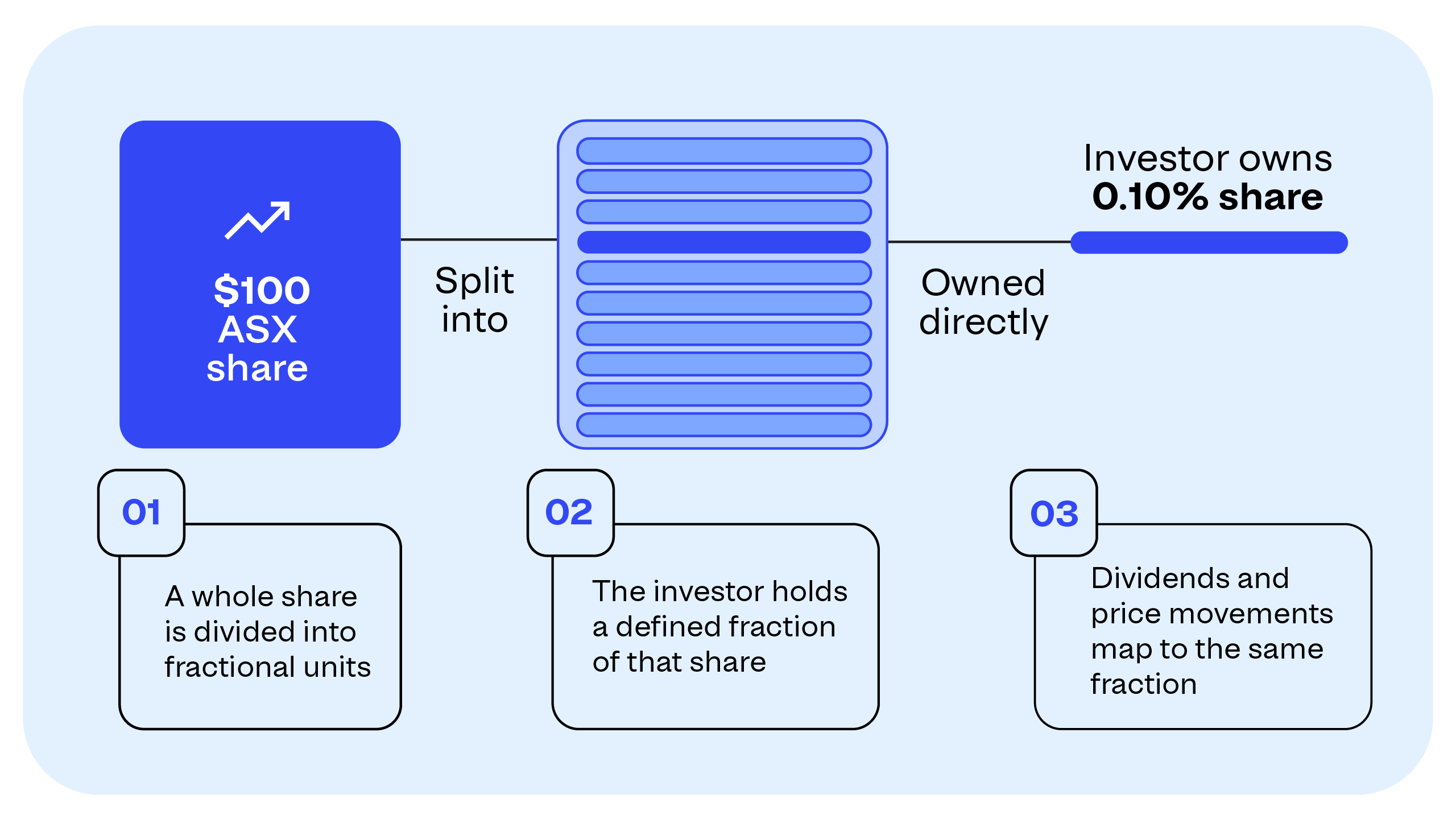
For example, if a company's share price is $100 and you invest $10, you may be able to buy one tenth of a share instead of a whole share.
Fractional trading is often offered through online investment platforms and can:
- help you start investing with a smaller amount of money
- give you access to shares that may otherwise be expensive
- make it easier to invest regularly
- help you spread your money (diversify) across different investments.
Who owns the investment?
Before using a fractional trading platform, it's important to understand how your investment is owned and held.
When you buy shares directly, the shares are generally held in your name and you have the rights that come with being a shareholder.
With fractional trading, the shares may be held on your behalf by the trading platform or by a custodian, in a shared account. This means the way your investment is owned can be different from traditional share ownership.
Depending on the platform, you might:
Directly own a fraction of a share.
Hold your investment through a pooled or custodial arrangement.
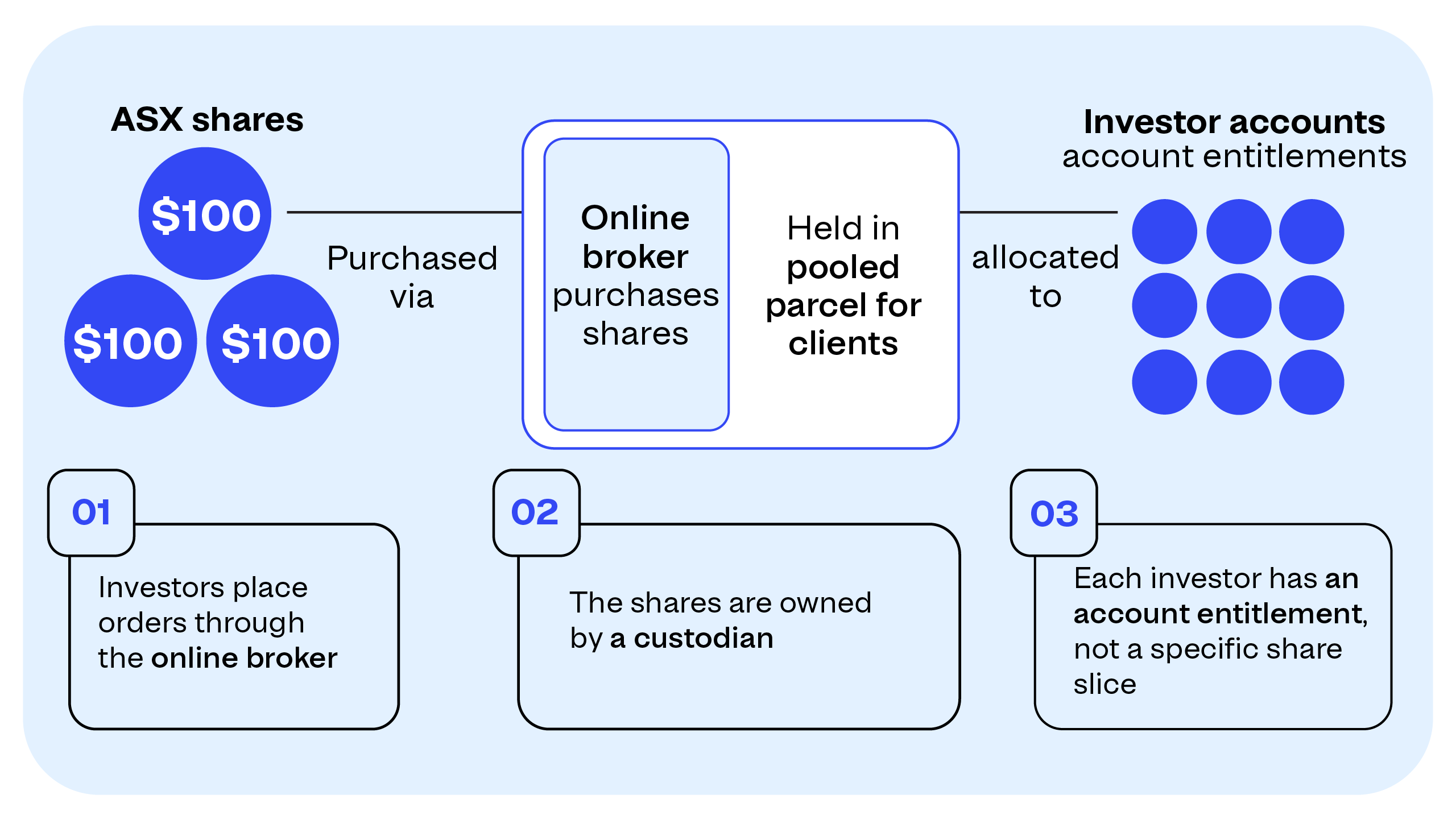
The structure can vary between platforms. It’s important you understand exactly how your investment is held and what rights come with it.
What difference does ownership make
If you own whole shares directly, you generally receive all the rights attached to those shares.
With fractional trading, your rights and protections may be different depending on how the platform operates.
Things that may be different include:
Voting rights - You may not have the same voting rights as someone who owns shares directly.
Corporate actions - Your ability to participate in shareholder activities may be different.
Transferring investments - You may not be able to transfer your investment to another platform in the same way that you could transfer directly owned shares.
How trades are executed - The price you receive when buying or selling fractional holdings may not always be the same as the market price at the moment you place your order
Gina held an account with a fractional trading provider for five years and, by adding small amounts of money frequently, built a sizeable investment. Over time the ongoing fees charged by the provider had increased, and Gina wanted to start using a different online broker.
Because the provider did not allow Gina to transfer the fractional part of the share she had purchased to the new broker, the only way Gina could switch brokers was to pay a fee to sell the fractional part, plus pay capital gains tax on the profit she had made, and then reinvest her money through the new broker.
What does fractional share trading cost?
Like investing more generally there are fees and costs associated with fractional share trading. All providers may have a slightly different fee structure, fees and costs, so read their disclosure documents before you invest.
In addition to usual share trading costs, commons costs and fees for fractional share trading may include:
- different pricing than buying whole shares
- FX fees when purchasing international shares
- forced liquidation costs if wanting to transfer platforms
Learn more about share trading, including costs and fees.
Fractional share trading isn't the only way to start investing with small amounts of money.
Managed funds and exchange-traded funds (ETFs) can also let you start with smaller amounts while spreading your money across many investments.
Questions to ask before you invest
Before you decide to do fractional share trading, ask yourself these key questions:
Do I understand what my money will be invested in?
- am I purchasing part shares in just one company, or in many companies?
- am I comfortable with the amount of investment risk I’m taking?
Do I understand who will own the investments?
- will I own the investments I buy, or will the provider own them?
- and what does that mean if I want to sell them?
Do I know what fees I’ll be paying?
- are those fees reasonable, considering how much I’ll be investing?
- how do the fees compare to those of other providers or brokers?
Am I sure this is the right way to invest to achieve my goals?
- does it match my long-term investment plan?
- have I compared what other investment opportunities and products are available, including managed funds, ETFs, and buying shares directly?
Join thousands of Australians and get tools, tips and calculators to help with your money - straight to your inbox each month.
Sign up