Last updated:
Pump and dump is where someone starts an organised campaign, often on social, to 'pump' (ramp) a share price so they can sell (dump) and make a profit. If you invest, you could lose money.
What is a pump and dump scheme?
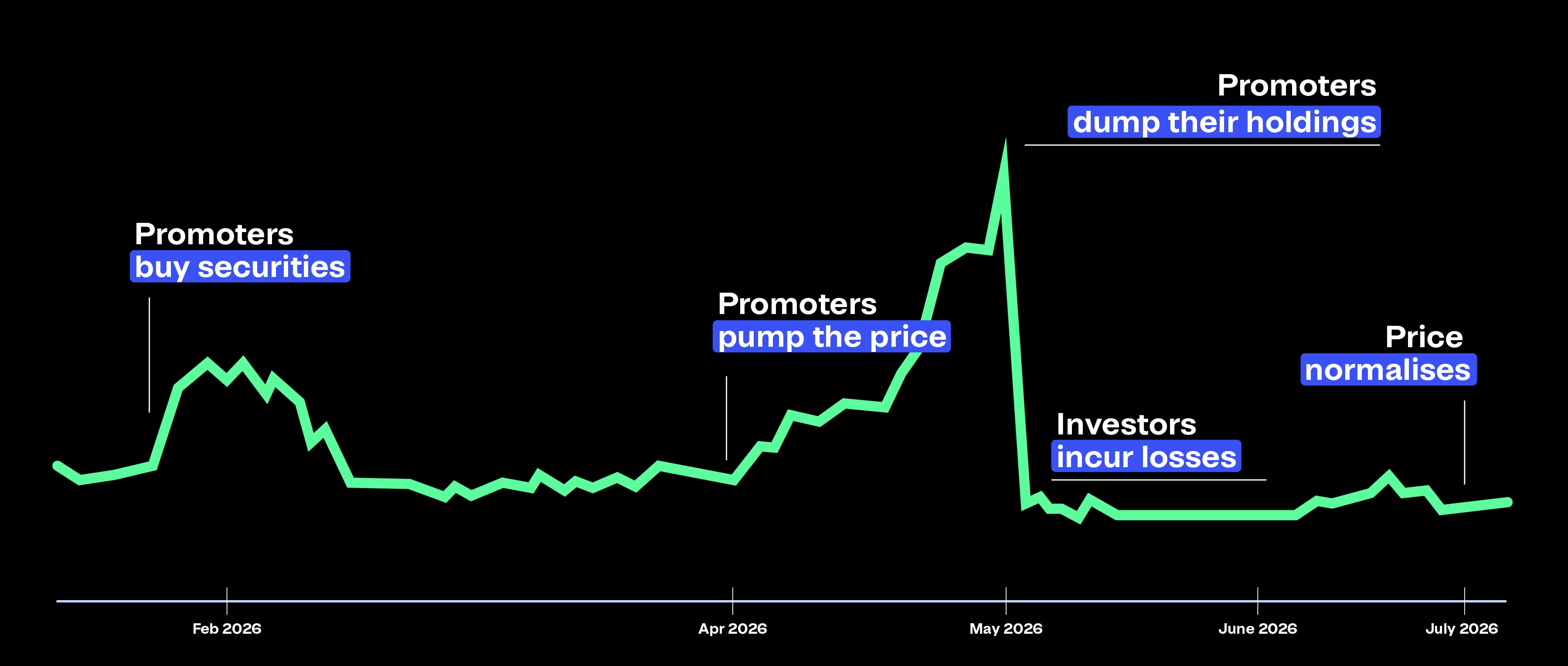
Pump and dump schemes are where a scammer buys shares in a company and starts an organised campaign to increase (or 'pump') the share price. They create social media ads with fake details, promising big returns or stock tips for free.
People running a pump and dump scheme often use social media and online forums to create hype about a stock and to spread fake news about the company. This excitement and interest artificially drive the price up as they lure investors into the pump.
They might impersonate a well-known finance expert, and use logos from well-known financial institutions and trading platforms to make their social media ads seem legitimate.
When you click on the ad and give your contact details, you’re then invited to join a private chat group where stock recommendations are made. The scammers then recommend you (and other victims) buy a stock they already own, to drive up the price. The scammers then sell (or 'dump') their shares and make a profit, while the other shareholders ride the fall and are out of pocket, often left with worthless shares.
Important: always question legitimacy
No matter how legitimate a social ad or an investment tips chat looks at first glance, double check to make sure you know who you're talking to. Scammers often impersonate trusted entities and respected business leaders. If you buy stocks recommended by someone without a licence and without doing your own research, you could lose your money if the stock is overvalued due to it being pumped.
It is the law in Australia that people recommending particular shares or stocks, must hold an Australian Financial Services Licence with ASIC.
If you use a platform that they recommend, it could be a fake investment platform.
If you provide scammers with identity documents, they may use them to open bank accounts or obtain credit in your name without your knowledge.
Ask yourself why they’d be giving you free investment advice. What’s really in it for them?
How a pump and dump scheme might work
step Scammers buy cheap shares in a small cap stock with low liquidity. They’ll typically target these types of shares because a small amount of buying and selling behaviour can have a big impact on the share price.
step They primarily target overseas shares (listed on a foreign exchange).
step They put an ad on social media that looks legitimate. It might use the image of a reputable finance expert, bank logo, or a well-known trading platform.
step When you click the ad, you’re invited to join an investment group apparently headed by the finance expert they’re impersonating. These groups usually interact on direct messaging apps (e.g. WhatsApp).
step The scammer, pretending to be the impersonated person or their ‘assistant’, will offer tips about a stock you should purchase (the stock they’ve already bought). This could be a share listed on the Australian market or an overseas market.
step Within the messaging group, there will typically be other scammers posing as investors, making comments that make the stock tips sound legitimate.
step You (and other victims) will buy the stock – which will increase the share price.
step This becomes a snowball effect as other people see the price increasing, believe the fake trading tips to be real, and also buy the stock.
step The scammer will then quickly sell their shares, making a profit and causing the share price to drop sharply.
step You and the other victims are left with shares that are potentially worth only a fraction of what you paid.
Pump and dump scheme warning signs
Watch out for:
- Paid advertising. Spruikers might pay big money for advertisements to appear high in online search results. They also advertise through social media. Avoid joining any groups these ads link you to.
- A rush of finfluencer endorsements. Fake finfluencers may start spreading misleading or fake information about a particular investment, maybe citing inside information. The coordinated activity can make it seem like investor hype.
- Unsolicited marketing. You might receive an unsolicited email, phone call or message. Be wary of anyone spruiking the attractiveness of a specific investment and creating a sense of urgency.
- Sudden forum comments. There might be a rush of commentary about a particular little-known investment across multiple online forums.
- Strange market behaviour. You might see a sudden price increase or spike in an investment that is new or not usually volatile.
How to protect your money
Pump and dump schemes can look very convincing. They’re designed to create in you a sense of urgency, a feeling of having special inside information, and a fear of missing a great thing. But before you invest your money, check basic facts about what you’re investing in and who with.
Good investments match your financial goals. They’re not based on FOMO or hype on social media, nor are they based on hot tips from an unverified source. Take the time to do some research and to perhaps get professional financial advice before committing your money.
Key actions to take:
check_box Learn where to turn for financial advice that is in your best interests.
check_box Read about common types of financial scams.
check_box Know what to do if you’ve been scammed.
check_box Know how to check on a company of person to make sure they’re legitimate.
check_box Learn how to spot the signs of investment hype.
Look after yourself
If a scam is causing you problems with debt, talk to a financial counsellor. This is a free and confidential service to help you get your finances back on track.
Finding out that you've been scammed is a horrible experience that can take a toll on your emotional wellbeing. If you need someone to talk to (24 hours a day, 7 days a week) contact:
Lifeline – 13 11 14 or the online Crisis Support Chat
Beyond Blue – 1300 22 4636 or Beyond Blue website
Report all scams to Scamwatch
Act fast if you suspect a scam
Scamwatch, run by the National Anti-Scam Centre (NASC), collates information about all scam types. They use this information to warn and protect the public. Scamwatch also sends information to other agencies, including ASIC and ReportCyber, to help stop scammers. Report all scams, including investment scams, to Scamwatch.
Join thousands of Australians and get tools, tips and calculators to help with your money - straight to your inbox each month.
Sign up